
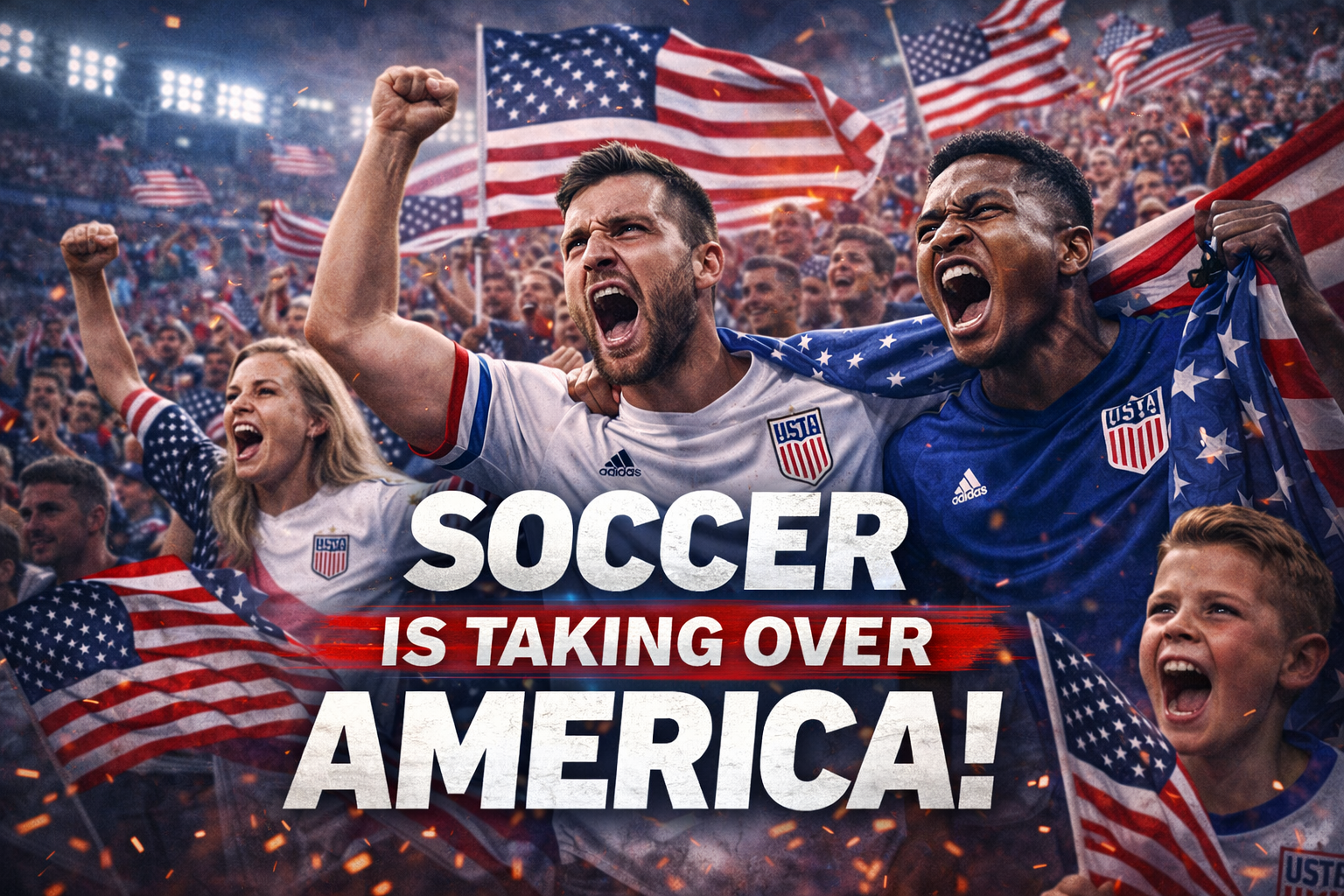
For decades, soccer was considered a secondary sport in the United States. Overshadowed by the NFL, NBA, and MLB, the world’s most popular game struggled to find its place in American culture.
That reality is changing — fast.
From sold-out stadiums to record-breaking TV deals, soccer is experiencing a boom in the U.S. that few predicted. Youth participation is exploding, global stars are choosing American clubs, and international audiences are paying attention. What once seemed impossible is now a serious topic of debate: Is the United States becoming the next major power in world football?
Europe, long accustomed to dominance, is starting to feel uncomfortable.
1. Why Soccer Is Growing Faster Than Ever in the U.S.
Several factors explain soccer’s rapid rise in America. First, demographics. Younger generations are more global, more connected, and more open to international sports. Soccer fits perfectly into that mindset.
Second, accessibility. Soccer is easy to play, easy to understand, and highly shareable on social media. Highlights go viral, goals become instant content, and star players build massive online followings.
Finally, the United States Soccer Federation and clubs have invested heavily in infrastructure. Modern stadiums, elite training facilities, and youth academies now rival those found in Europe.
What was once a niche sport has become a mainstream entertainment product.
2. MLS Is No Longer a “Retirement League”
MLS spent years fighting an unfair reputation. For a long time, it was viewed as a destination for aging stars looking for one final paycheck.
That narrative is outdated.
Today, MLS clubs are signing younger players, developing local talent, and selling prospects to European teams for significant fees. The league has become a stepping stone — not an endpoint.
At the same time, experienced international players are joining MLS not because they are finished, but because the league offers stability, exposure, and quality of life. This combination is extremely attractive in a football world increasingly defined by pressure and instability.
3. The American Sports Model Is a Secret Weapon
One major difference between the U.S. and Europe lies in structure.
American sports prioritize sustainability. Salary caps, shared revenues, and strict financial controls prevent reckless spending. While critics argue this limits competitiveness, it also protects clubs from collapse.
European football, by contrast, is full of financial chaos. Debt, failed ownerships, and constant crises dominate headlines. Fans are tired of uncertainty.
The American model creates trust — among investors, players, and supporters. Over time, this stability could give U.S. soccer a powerful advantage over traditional European systems.
4. World Cup 2026 Will Accelerate Everything
The FIFA World Cup 2026 is expected to be the most watched sporting event in history — and the United States will be at the center of it.
Hosting the World Cup will massively boost soccer’s visibility in America. Grassroots programs will grow, sponsorships will increase, and media coverage will reach new levels.
Historically, World Cup host nations experience long-term football development. With its economic power and marketing expertise, the U.S. is uniquely positioned to turn this moment into a permanent transformation.
Europe knows this — and that’s why attention is shifting west.
5. Could the U.S. One Day Challenge Europe on the Pitch?
Right now, Europe still dominates global football. The best leagues, coaches, and players remain there. But dominance is not permanent.
If current trends continue, the U.S. could become a serious competitor within the next two decades. Not by copying Europe, but by doing things differently.
The future of football may not belong to a single continent. Instead, it may become truly global — with the United States playing a central role rather than watching from the sidelines.
Final Verdict: A New Football Power Is Rising
Soccer’s rise in the United States is no longer hype — it’s reality.
While Europe still leads, the gap is narrowing. Infrastructure, investment, youth development, and global interest are all pointing in the same direction.
The question is no longer if the U.S. will matter in world football — but how soon.







Leave a Reply